Maths and physics tuition · Universitätsviertel, Augsburg
From quadratics to Fourier without fear
Only maths. Only physics. All of it. Formelwerk teaches two subjects and nothing else — the Bavarian Oberstufe syllabus in full, and the first six weeks of Analysis I for the summer before university.
Most tuition begins with the chapter you are stuck on. We begin one step earlier: with the chain of topics that chapter sits on. Take the five-minute diagnostic and the map below shows you which link in the chain to work on first.
- Linear & quadratic equations
- Polynomial functions
- Differentiation
- Integration & the main theorem
- Taylor & Fourier series
- topics on the map
- 35topics on the map
- subjects, no others
- 2subjects, no others
- students per group, at most
- 8students per group, at most
01 — The topic map
Every topic, and what it stands on
Thirty-five topics from the Bavarian Oberstufe in mathematics and physics, plus the university bridge. An arrow from A to B means you need A before B makes sense. Select any topic to see what it rests on and what it unlocks.
- Secure (0)
- Worth checking (0)
- Gap (0)
- Not tested (35)
All thirty-five topics are grey until you take the diagnostic. Nothing here is an assessment of ability.
Use the arrow keys to move between topics, Home and End to jump to the first or last topic, and Enter or Space to open the details for the selected topic.
The map scrolls sideways on narrow screens. The list view has the same content in reading order.
02 — The diagnostic
Fifteen questions, about five minutes
One question per topic, four options, no time limit per question. Skip anything you have genuinely never been taught — a skipped question leaves that topic grey rather than red, which is more useful to us than a guess.
What this test is, and what it is not
It is a starting point for a conversation, not an assessment of your ability. Fifteen questions reach fifteen of thirty-five topics. It cannot see how you work under pressure, how you write a solution down, or what you could do with a fortnight of practice. Nobody at Formelwerk will use the result to tell you what grade you will get.
- 15questions
- ≈ 5minutes
- 15 / 35topics tested directly
03 — Formats
Eight formats, two subjects
Groups of three to eight, block courses with a fixed end date, and one-to-one where a timetable leaves nothing else. Filter by subject, year group and area of the map.
8 of 8 formats
- Mathematics & physics · all year groupsfree
Diagnostic test
5 minutes online, then a 30-minute conversation
Fifteen questions online, then half an hour at our table with the map printed out. We walk through what the test found, what it could not find, and whether we are the right people for you at all.
- Mathematics · Q11 / Q12 / Abitur€99
Upper-school mathematics, group of three
90 minutes weekly, three students, term contract · per month
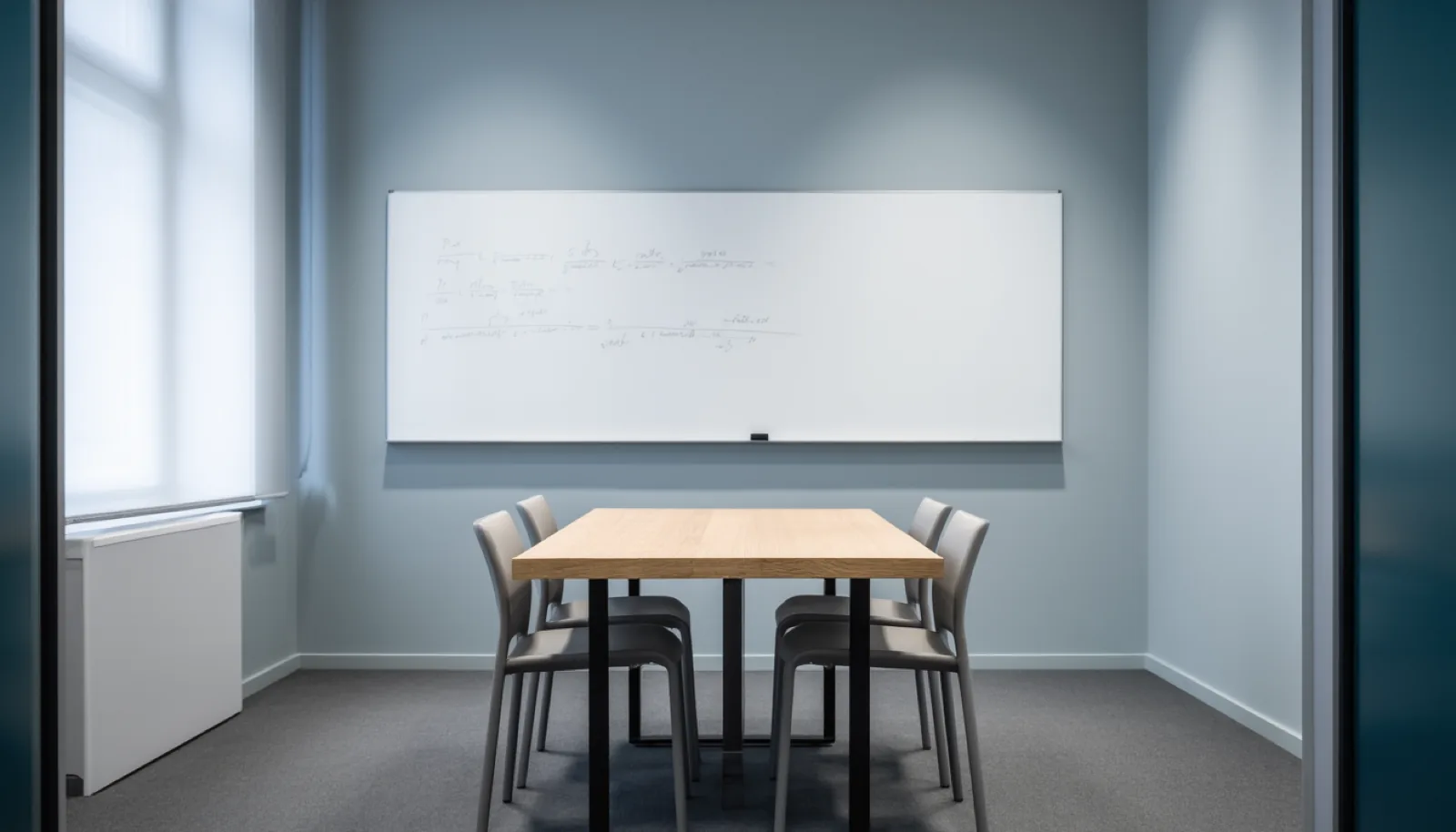
The core of the institute. Three students of the same year group at one table, one tutor, one whiteboard. We follow the Bavarian syllabus but the order is set by the map: whatever came back amber or red in the diagnostic gets attention first.
- Physics · Q12 / Abitur€390
Physics exam preparation (Leistungskurs)
8 weeks · 2 × 90 minutes weekly · groups of four · for the full eight weeks
Eight weeks that walk the whole electrodynamics chain, from the electric field to the LC circuit to the photoelectric effect, then quantum physics and the nucleus. Every session ends with a past Abitur task written under exam conditions and marked with the official scheme.
- Mathematics · Starting university€480
University bridge "Analysis I"
6 weeks · 1 × 150 minutes weekly · up to eight participants · for the full six weeks
For the summer before the first semester. School mathematics asks you to calculate; Analysis I asks you to prove. Six weeks on sequences and series, the ε-definition of a limit, induction, and the first Taylor and Fourier expansions — with weekly problem sheets in the style your university will actually set.
- Mathematics · Year 10 – 11€180
Bridging course into the Oberstufe
5 weeks · 1 × 90 minutes weekly · groups of five · for the full five weeks
Almost every gap we find in Q12 started in year 10. Five weeks on the four foundation topics — terms and fractions, linear and quadratic equations, functions and graphs, powers and logarithms — until they are automatic rather than effortful.
- Mathematics · Q12 / Abitur€165
Stochastics intensive before the Abitur
3 weeks · 1 × 120 minutes weekly · groups of six · for the full three weeks
The part of the syllabus that is usually taught last and revised least. Bernoulli chains, the binomial distribution, one- and two-sided hypothesis tests and the normal distribution — with the table work and the wording of conclusions practised explicitly.
- Physics · Q11€210
Physics test preparation, basic course
4 weeks · 1 × 90 minutes weekly · groups of five · for the full four weeks
Mechanics as it is actually examined: free-body diagrams, energy versus momentum arguments, circular motion and the harmonic oscillator. We spend as much time on how an answer is written down as on how it is found.
- Mathematics & physics · all year groups€62
One-to-one, mathematics or physics
60 minutes, booked individually or as a block of ten · per session
For a single stubborn topic, for a week off sick, or for anyone whose timetable rules out a fixed group slot. We normally suggest a group first — three students argue with each other, and that is where a lot of the learning happens.
04 — University bridge
School asks you to calculate. Analysis I asks you to prove.
The most common reason a strong Abitur grade in mathematics does not survive the first semester is not difficulty. It is a change of genre.
In the Oberstufe a task tells you what to compute and you are marked on getting there. In the first Analysis lecture you are handed a statement and asked to show that it holds — for every ε, for all n beyond some N, with a chain of implications that a tutor will read line by line. Nobody teaches that transition, because school finishes before it and university assumes it happened.
Six weeks, once a week, one hundred and fifty minutes. Sequences and series. Convergence criteria. The ε-definition of a limit, written out properly. Induction that survives a marker. And the first Taylor and Fourier expansions, which is where school analysis and university analysis finally meet.
We run it in July, August and September, before the winter semester. Eight participants at most, because the entire point is that somebody reads what you wrote.
Enquire about the bridge course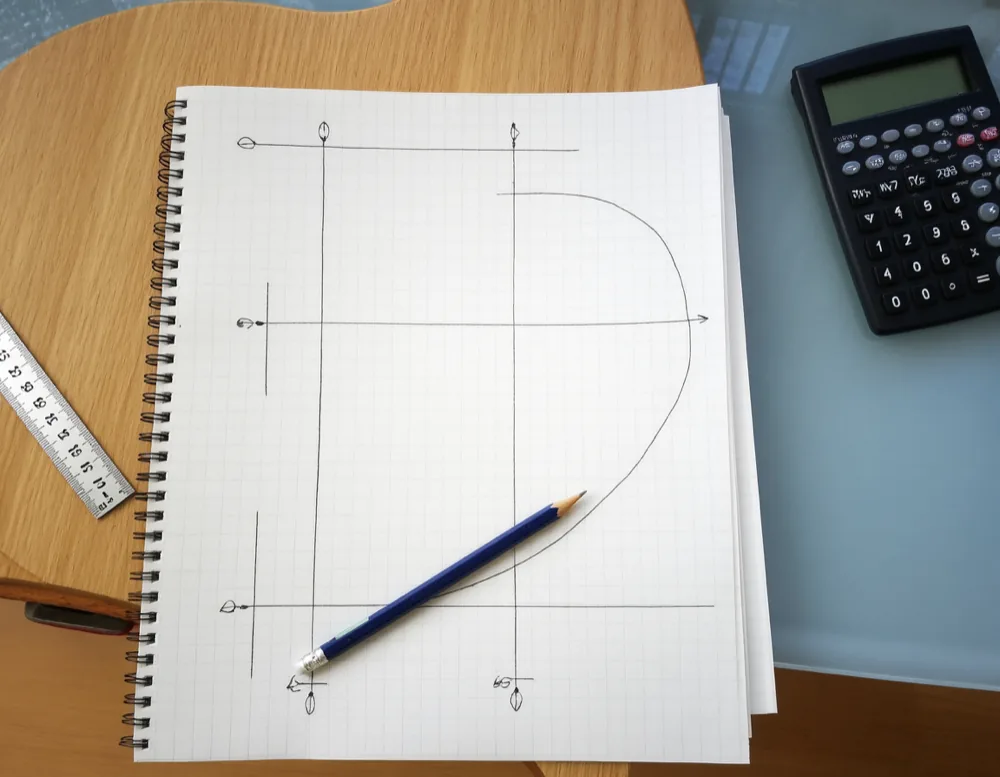
What the six weeks cover
Sequences & series
Convergence, the geometric and harmonic series, and the standard convergence criteria.
Proof technique & induction
Direct proof, contradiction, and writing an induction that a marker will actually accept.
The ε-definition of a limit
Turning "gets arbitrarily close" into a quantified statement you can actually prove.
Taylor & Fourier series
Approximating a function by polynomials, and decomposing a signal into pure sines.
05 — Tutors
Three people, two subjects
Everybody who teaches here has taught the subject before, in a school or at the university. There are no student assistants and no rotating pool.
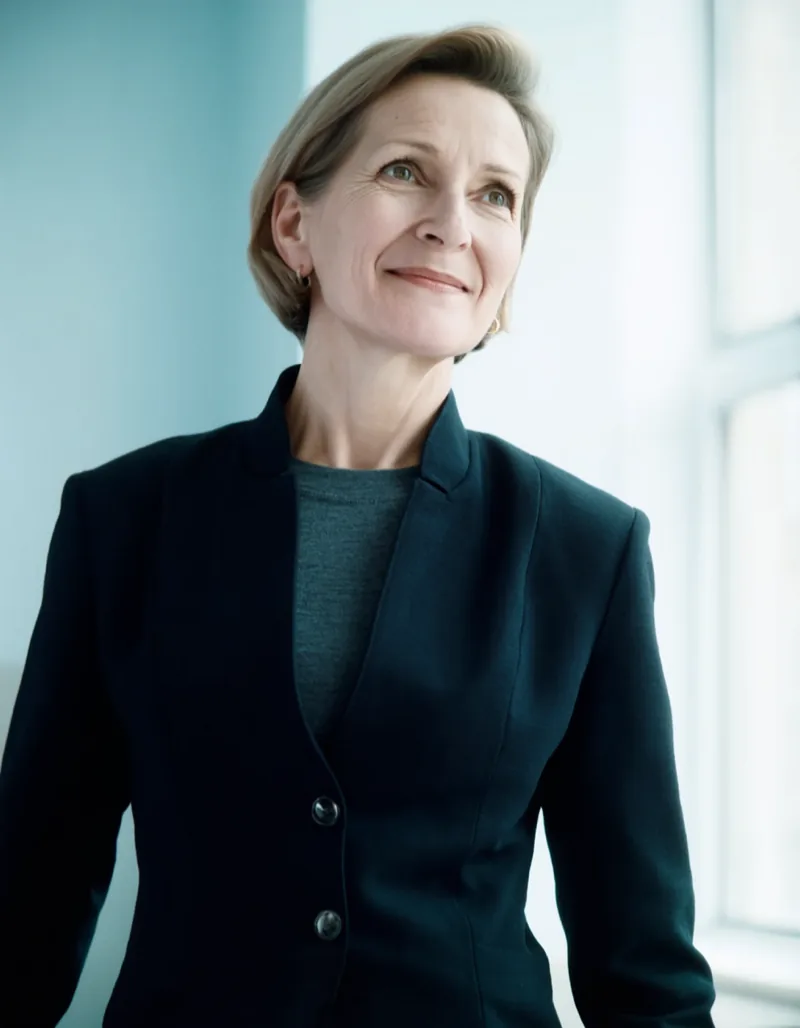
Dr. Miriam Keßler
Institute director · Analysis and university bridge
Doctorate in mathematics (functional analysis), Universität Augsburg · eleven years of teaching
Miriam ran first-semester Analysis tutorials at the university for six years and founded Formelwerk after seeing the same four gaps arrive every October. She teaches the bridge course and the Q12 analysis groups, and she designed the topic map on this page.
Teaches on the map
- Limits & continuity
- Differentiation
- Integration & the main theorem
- Sequences & series
- The ε-definition of a limit
- Taylor & Fourier series

Jonas Brehm
Physics · electrodynamics and quantum physics
Staatsexamen in physics and mathematics (Gymnasium) · former Leistungskurs teacher
Jonas taught physics Leistungskurse at a Gymnasium in Schwaben for eight years and has marked Abitur papers as a second examiner. He runs the eight-week exam preparation and insists that every solution is written out in full, because that is where the marks are.
Teaches on the map
- Electric field & capacitor
- Magnetic field & induction
- LC circuit & EM waves
- Quantum physics & atomic models
- Nuclear physics & radioactivity
- Oscillations

Yasmin Aydemir
Stochastics · geometry · foundations
M.Sc. mathematics, Universität Augsburg · six years of tutoring
Yasmin takes the bridging course into the Oberstufe and the stochastics intensive. She is the one who will send a student back to fractions without making it feel like a punishment, and most of our amber nodes end up on her table.
Teaches on the map
- Terms & fractions
- Linear & quadratic equations
- Probability & counting
- Bernoulli & binomial distribution
- Hypothesis tests
- Vectors & lines in space
06 — Prices
What it costs
All prices include VAT. Block courses are paid once for the whole block; the group course is billed monthly and runs for a school term.
| Format | Format details | Price |
|---|---|---|
| Diagnostic test | 5 minutes online, then a 30-minute conversation | free |
| Upper-school mathematics, group of three | 90 minutes weekly, three students, term contract | €99per month |
| Physics exam preparation (Leistungskurs) | 8 weeks · 2 × 90 minutes weekly · groups of four | €390for the full eight weeks |
| University bridge "Analysis I" | 6 weeks · 1 × 150 minutes weekly · up to eight participants | €480for the full six weeks |
| Bridging course into the Oberstufe | 5 weeks · 1 × 90 minutes weekly · groups of five | €180for the full five weeks |
| Stochastics intensive before the Abitur | 3 weeks · 1 × 120 minutes weekly · groups of six | €165for the full three weeks |
| Physics test preparation, basic course | 4 weeks · 1 × 90 minutes weekly · groups of five | €210for the full four weeks |
| One-to-one, mathematics or physics | 60 minutes, booked individually or as a block of ten | €62per session |
Sibling discount of ten per cent on the monthly group course. If the cost is the obstacle, say so in the enquiry — we hold a small number of reduced places each term and we would rather use them than leave them.
The diagnostic and the half hour that follows it are free and carry no obligation. If we conclude that you do not need us, we will say so.
07 — Book
Book the free half hour
Tell us who is learning, what for and when you can come. We answer within two working days. Nothing is charged until a place is confirmed in writing.
Opening hours
- Monday – Thursday
- 14:00 – 20:00
- Friday
- 14:00 – 18:00
- Saturday
- 09:00 – 13:00
- Sunday
- closed
Teaching runs in the afternoon and evening; the office answers the phone from 14:00.
08 — Learners
What people say afterwards
Collected with permission at the end of a course. We have not edited out the parts where the map was wrong.
I got the integral questions wrong and assumed integration was my problem. The map put an amber marker on limits instead. Two sessions on limits and the integrals stopped being mysterious.
Lena T.Q12, Gymnasium in Augsburg The physics course is eight weeks of past papers with somebody who has actually marked them. Nobody promised me a grade. They told me which three chapters were costing me points and then we fixed them.
Marek S.Physics Leistungskurs, Abitur 2025 I came out of school with a 13 in maths and still could not write a proof. The bridge course was the first time anyone explained what a lecturer means by "show that". First semester went fine.
Frederike H.Bridge course, now studying physics in Augsburg My son had four red nodes in January and two in April. What I liked was that they showed me the same picture I was shown at the start, not a new invoice with a new promise.
Andreas K.Parent, Q11
09 — Questions
The questions we are actually asked
- Does the diagnostic test say how good I am at maths?
- No, and we would not trust it if it claimed to. Fifteen questions test fifteen of the thirty-five topics on the map for about twenty seconds each. It shows where to start a conversation. It says nothing about ability, potential or what grade you will get.
- Why does a topic turn amber when I was never asked about it?
- Because a wrong answer often traces back one step. If the product rule goes wrong, the cause is frequently limits or polynomials rather than the rule itself. So the direct prerequisites of every red node turn amber — "worth checking", not "wrong". We deliberately stop after one step instead of guessing further down the chain.
- Do you guarantee a better grade?
- No. Nobody honestly can — a grade depends on the paper, the teacher, the day and a dozen things outside a tutoring room. What we describe instead is the method: find the earliest topic in the chain that is not solid, work on that one, and re-test it. That is the whole approach, and you can watch it working on the map.
- Only maths and physics? Really nothing else?
- Really nothing else. Three tutors, two subjects, one syllabus each. If you need English or chemistry we will happily name someone in the Universitätsviertel who does that properly, but it will not be us.
- Which syllabus do you follow?
- The Bavarian LehrplanPLUS for the Gymnasium, Q11 and Q12, in both subjects. The map follows its topic sequence; the university-bridge cluster follows the first six weeks of Analysis I as it is read at Universität Augsburg.
- How do I cancel?
- The monthly group course runs for a school term and can be cancelled in writing with four weeks notice to the end of a month. Block courses are booked for their full length. Single sessions can be moved free of charge up to 24 hours in advance.
10 — Find us
Universitätsviertel, Augsburg
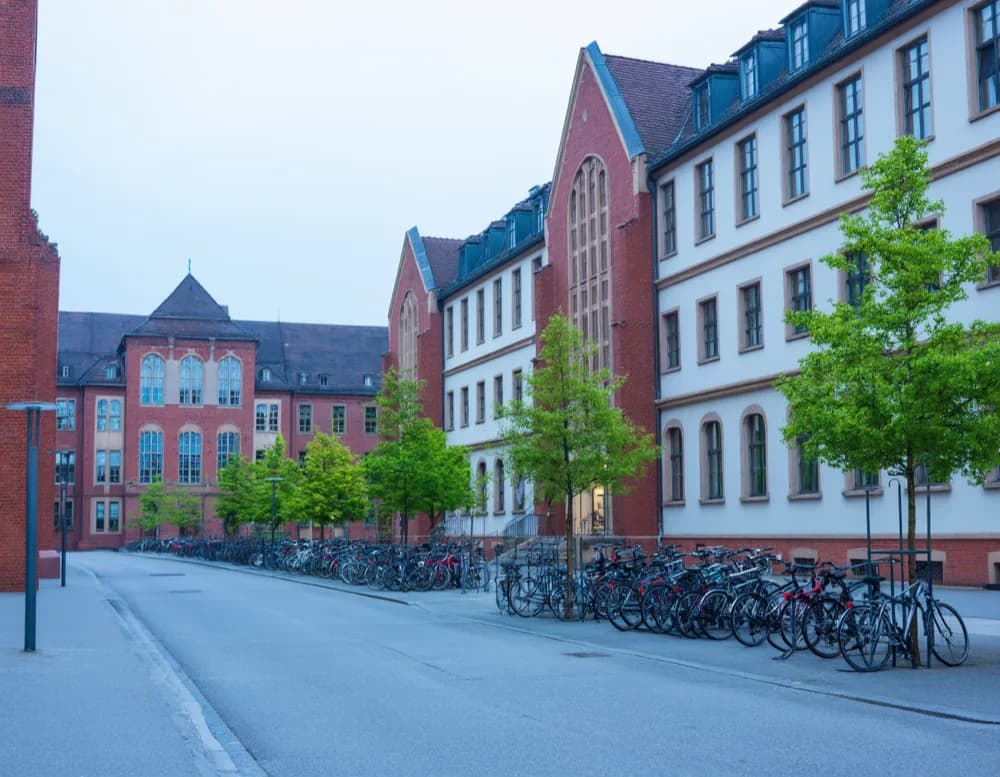
Eight minutes on foot from the Universität tram stop, line 3. Bicycle stands in the courtyard.
Address
Formelwerk Lerninstitut GbR
Salomon-Idler-Straße 14
86159 Augsburg · Universitätsviertel
Telephone: +49 821 4508127
Email: kontakt@formelwerk.bizbrew.app
Map loading is off by default
This map is hosted by OpenStreetMap. Loading it sends your IP address to a third party, so we do not load anything until you say so.
Applies to this visit only.